Dr. Gymbro
←

#ketogenic diet

2 articles
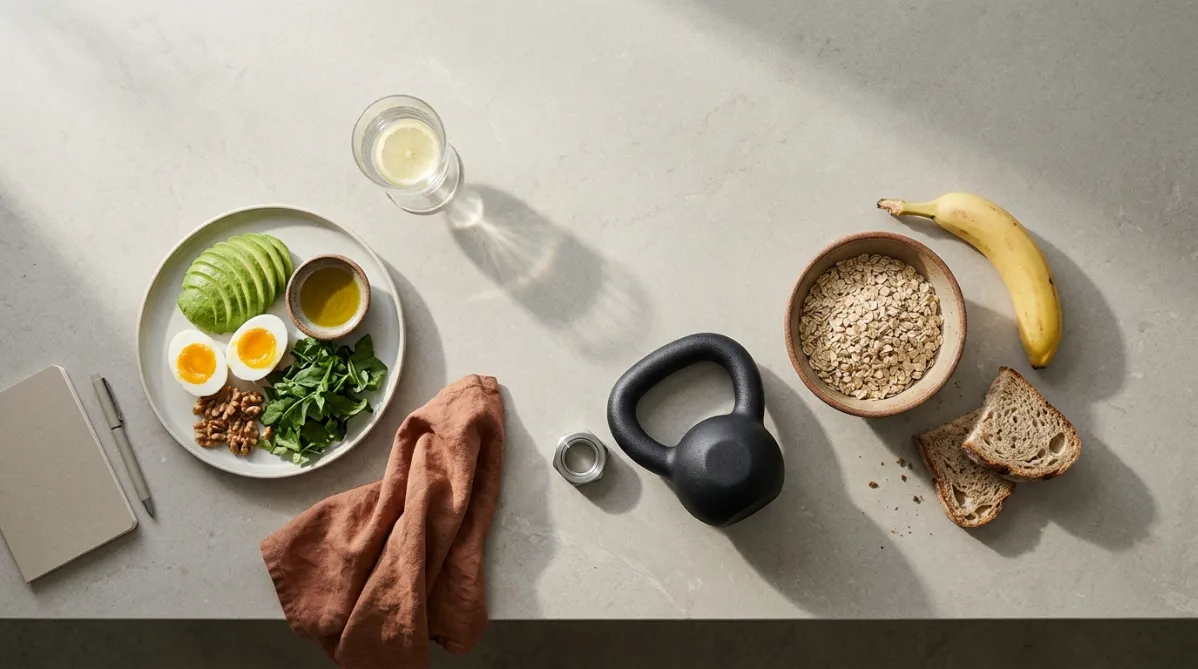
A wide, editorial-style flat lay photographed from above on a pale warm-gray stone countertop, bathed in soft natural window light with gentle long shadows. On the left half, a minimalist keto plate: sliced avocado fanned out in creamy green, two soft-boiled eggs halved to reveal golden yolks, a small pile of dark leafy greens, a few walnuts, and a glossy drizzle of olive oil in a small ceramic dish. On the right half, a contrasting arrangement of carbohydrates: a rustic bowl of oats, a ripe banana, and a few slices of sourdough, arranged with equal visual weight. Between the two sides, a matte black kettlebell sits at the center, and a slim brushed-steel barbell collar rests nearby, suggesting resistance training without a gym setting. A simple, elegant glass of water with a lemon slice catches the light and casts a delicate refracted glow, hinting at water weight and glycogen. A linen napkin and a small, neutral-toned notebook with a pen add a journal-like touch. The palette is muted and modern: sage green, cream, terracotta, charcoal, and soft butter yellow. The composition is clean and balanced with generous negative space across the top and bottom edges, suitable for headline overlay. The mood is calm, thoughtful, and science-informed, like a contemporary health and wellness magazine cover. Shallow depth of field, crisp textures on the food, subtle film-like grain, and high-end, trendy food photography styling.
nutrition

Keto pour les haltérophiles : la graisse diminue, mais la masse maigre en retrait de 1,4 kg

BY DR. GYMBRO ·

Une revue de 50 études montre que les régimes cétogènes réduisent la graisse tout en maintenant généralement la force. Chez les pratiquants de musculation, la masse maigre était en moyenne 1,37 kg plus basse qu’avec des régimes non cétogènes, mais les auteurs estiment ce résultat de faible certitude. Ils soulignent que cela ne prouve pas une perte musculaire ; le glycogène et l’eau peuvent expliquer la différence. Les performances à haute intensité étaient le plus souvent inchangées ou légèrement détériorées. Voici à qui le keto peut convenir en phase de coupe, qui devrait l’éviter, et comment préserver la masse maigre.
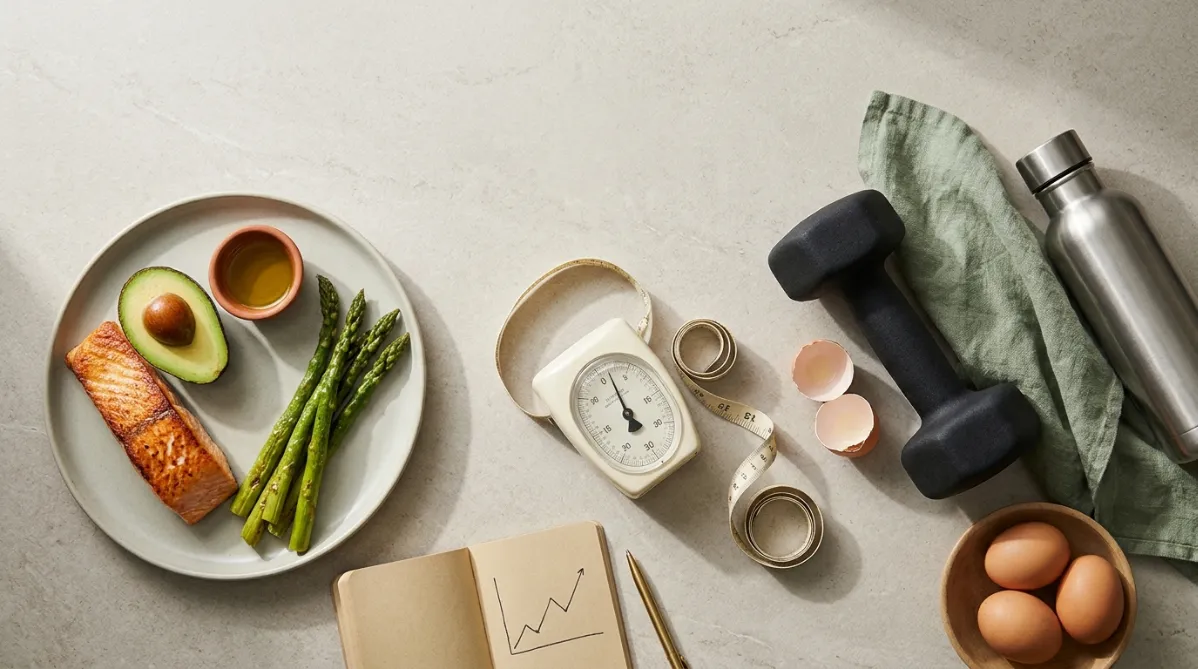
A bright, minimalist editorial flat-lay photographed from above on a pale warm-gray stone countertop in soft natural window light. On the left, a ceramic plate holds a keto-style meal: a seared salmon fillet with crisp skin, half an avocado with a glossy pit, a scattering of bright green asparagus spears, and a small dish of golden olive oil. On the right, a matte black dumbbell rests beside a folded sage-green linen towel and a slim stainless steel water bottle. A raw egg and a few whole eggs in a shallow wooden bowl add a protein cue. In the center, a clean analog kitchen scale and a flexible cream-colored measuring tape curl gracefully in a loose spiral, hinting at body composition tracking. A small open notebook with a minimal hand-drawn line graph, with no legible text, sits at the lower edge with a thin brass pen.

The palette is calm and modern: muted sage green, creamy ivory, warm terracotta accents from a small clay ramekin, and deep charcoal from the dumbbell. Shadows are soft and long, falling diagonally, giving gentle depth. The composition leaves generous negative space at the top and right for title placement. Shallow depth of field, crisp focus on the salmon and dumbbell, subtle film-like grain, and a refined, trendy health-journal look reminiscent of contemporary wellness magazines. Natural, airy, balanced, and slightly editorial, with no people, no text, and no futuristic elements.
nutrition

Le keto préserve-t-il la masse musculaire pendant un régime ? Les données sur la masse maigre surprennent

BY DR. GYMBRO ·

Le keto est souvent présenté comme une méthode de perte de poids qui préserve les muscles, grâce aux effets anti‑cataboliques supposés des cétones. Une nouvelle revue narrative publiée dans *Nutrients* met cette idée à l’épreuve des données cliniques et la trouve insuffisante. Les régimes cétogènes font surtout perdre de la graisse, mais les méta‑analyses montrent des pertes légèrement plus importantes de masse maigre que les régimes non cétogènes. Le problème, c’est que le DXA et le BIA ne distinguent pas le muscle de l’eau et du glycogène, rendant l’effet réel sur le muscle flou. Ce qui protège réellement les tissus maigres, c’est le trio bien connu : apport protéique suffisant, entraînement de résistance et déficit modéré.

This page is available in